
How to prevent purchase order shortages from delaying production
Raising purchase orders in a manufacturing business can make or break your on-time delivery performance. There are a number of factors that you need to consider to make sure that your buying function doesn’t stop the smooth flow of production orders. Happy customers often lead to more business, so make sure that you have this part of your operation under control.
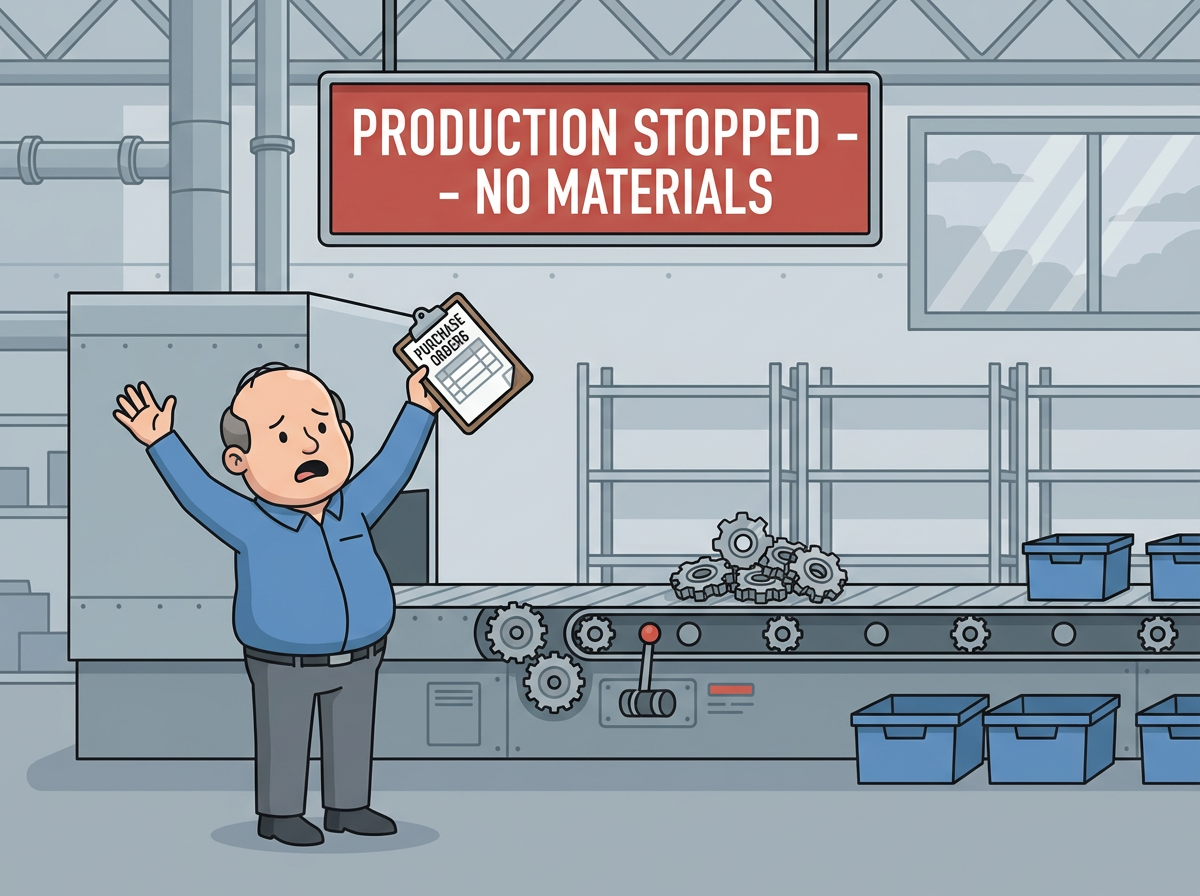
Putting this back into context quickly. If you run out of materials, you can’t produce your orders. There are lots of factors that can affect this, so let’s have a quick run-through of the main trip hazards that we see in a manufacturing business when it comes to purchasing.
Things to look out for:
-
Not setting purchase lead times against parts. If you don’t periodically update your purchasing lead time information, your system won’t know when you need to order the items. Make this a housekeeping routine and cycle through your regularly purchased items frequently.
-
Wrong works order due dates. Similarly, not keeping on top of the works order due dates will give your system the wrong due dates for your purchase orders. Check your works order book periodically to keep it clean. If a customer changes the sales order dates, follow suit with the works order.
-
Use your contract review process to avoid overcommitting. If you take an order on and the material lead time is longer than the total available time to deliver, you know you have a problem. Make sure that purchasing doesn’t become the fall guy by checking the details before you accept your customer’s purchase order!
-
Use MRP messages effectively. If you are bypassing the MRP function of your ERP system and just buying instinctively and reactively, checking MRP once a week will help mop up any gaps.
-
Incorrectly set minimum stock levels. If you don’t define the minimum stock levels effectively for your high-use items there is a good chance that you’ll run aground at some point. Like the other housekeeping routine items listed above, assign someone to check the minimum stock levels from time to time.
-
Use your approved supplier list. Even if you place your order on time, with the right lead time, for the right quantities, you can still be let down by your supply chain. Use your approved supplier list for the reason it is there – to manage your suppliers. Rate them, educate them, learn how you make their lives harder and work together to ensure the on-time delivery of materials to your factory.
-
Get supplier updates. If you have high-risk deliveries coming into your factory, that could hold up production, make sure you get regular updates from them. Update the purchase orders if you agree to any delays and communicate with the rest of your team, so that works orders can be rescheduled etc…
Educate your team
Purchase order shortages are a nightmare for on-time delivery performance. Every delayed order causes additional effort and confusion because of the amount of work required to try and juggle everything around and not upset further customers.
Quite often, we trip ourselves up. It isn’t the system and it isn’t the supplier. It’s us, in between. Adopting the routines and processes that we need for an effective system is a great strategy for most manufacturers.
If the whole purchasing process is being juggled inside someone’s head, that’s a recipe for burnout (or missing something). Systematic thinking, preferably via an ERP system, makes the whole process manageable.