
Replace Excel in Manufacturing
Move Beyond Spreadsheets and Take Control of Your Operations
Most manufacturing businesses rely on Excel far more than they should — for production planning, inventory, MRP, job tracking, and purchasing. It works at first. But as your business grows, Excel becomes harder to manage, less reliable, and increasingly risky.
The Problem with Using Excel in Manufacturing
Excel is flexible — but it is not designed to run a manufacturing operation.
Multiple Versions
Different versions of the same spreadsheet across teams.
Manual Data Entry
Hours spent entering data across different files.
No Real-Time Visibility
Static data that's outdated the moment it's entered.
Formula Errors
Broken formulas and incorrect calculations causing costly mistakes.
Limited Collaboration
Teams unable to work together effectively.
What started as a simple solution becomes a major bottleneck.
Signs You've Outgrown Excel
You may be relying too heavily on spreadsheets if:
- You don't fully trust your data
- You spend hours updating spreadsheets
- Stock levels are often inaccurate
- Production schedules change constantly
- You struggle to meet delivery dates
- Only one or two people understand your system
These are clear signs your processes are no longer scalable.
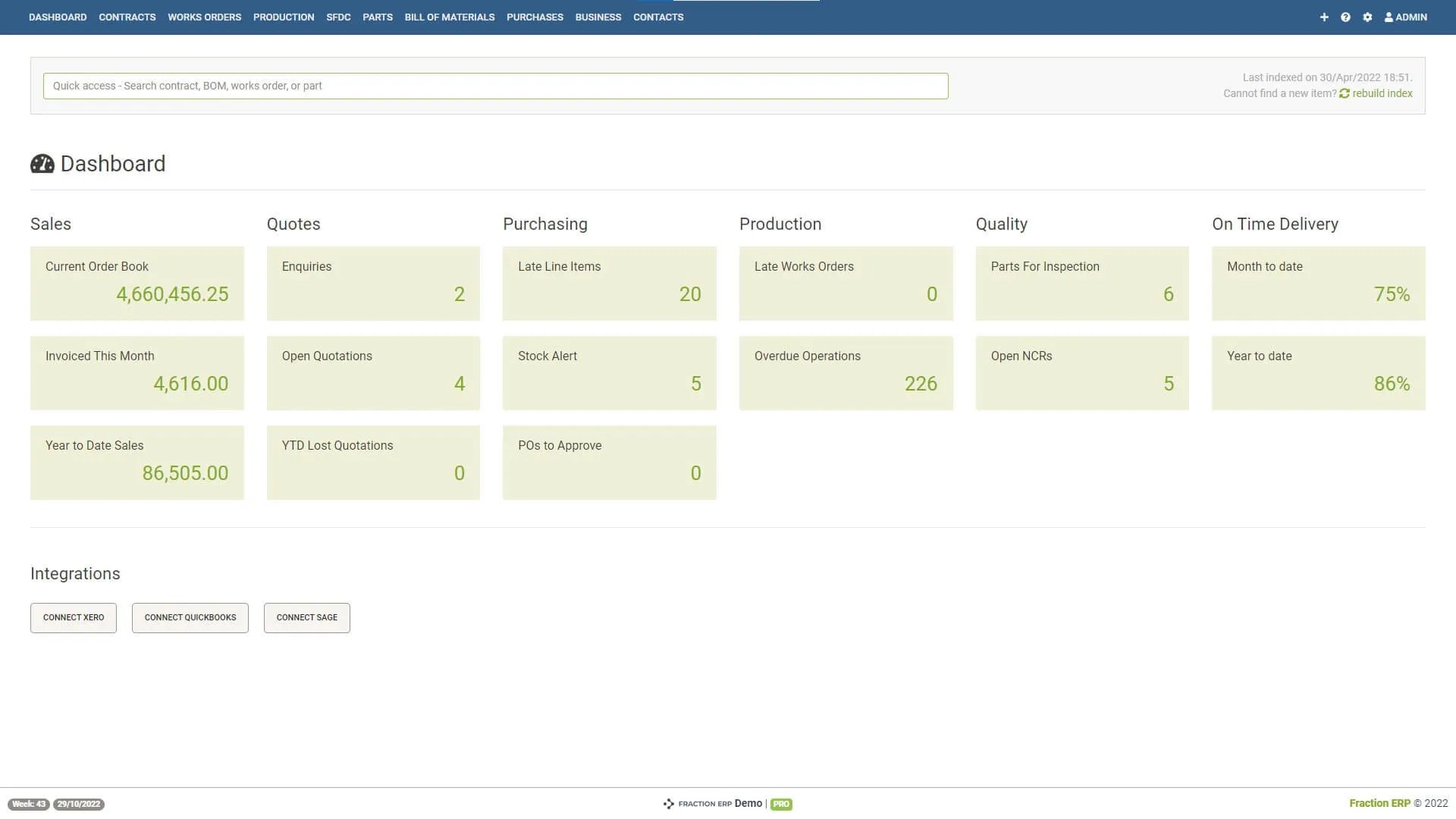
What Excel Can't Do
Spreadsheets are not built to handle real manufacturing requirements. This leads to disconnected processes across your operation.
A Better Approach: Replace Excel with an Integrated System
Everything updates in one place, in real time.
From Spreadsheet Chaos to Operational Control
With Excel
- Data spread across multiple files
- Updates are manual
- Errors are common
- Visibility is limited
With Fraction ERP
- All data in one system
- Updates happen automatically
- Processes are connected
- Full visibility across operations
How Fraction ERP Replaces Excel
Designed specifically for manufacturers moving away from spreadsheets.
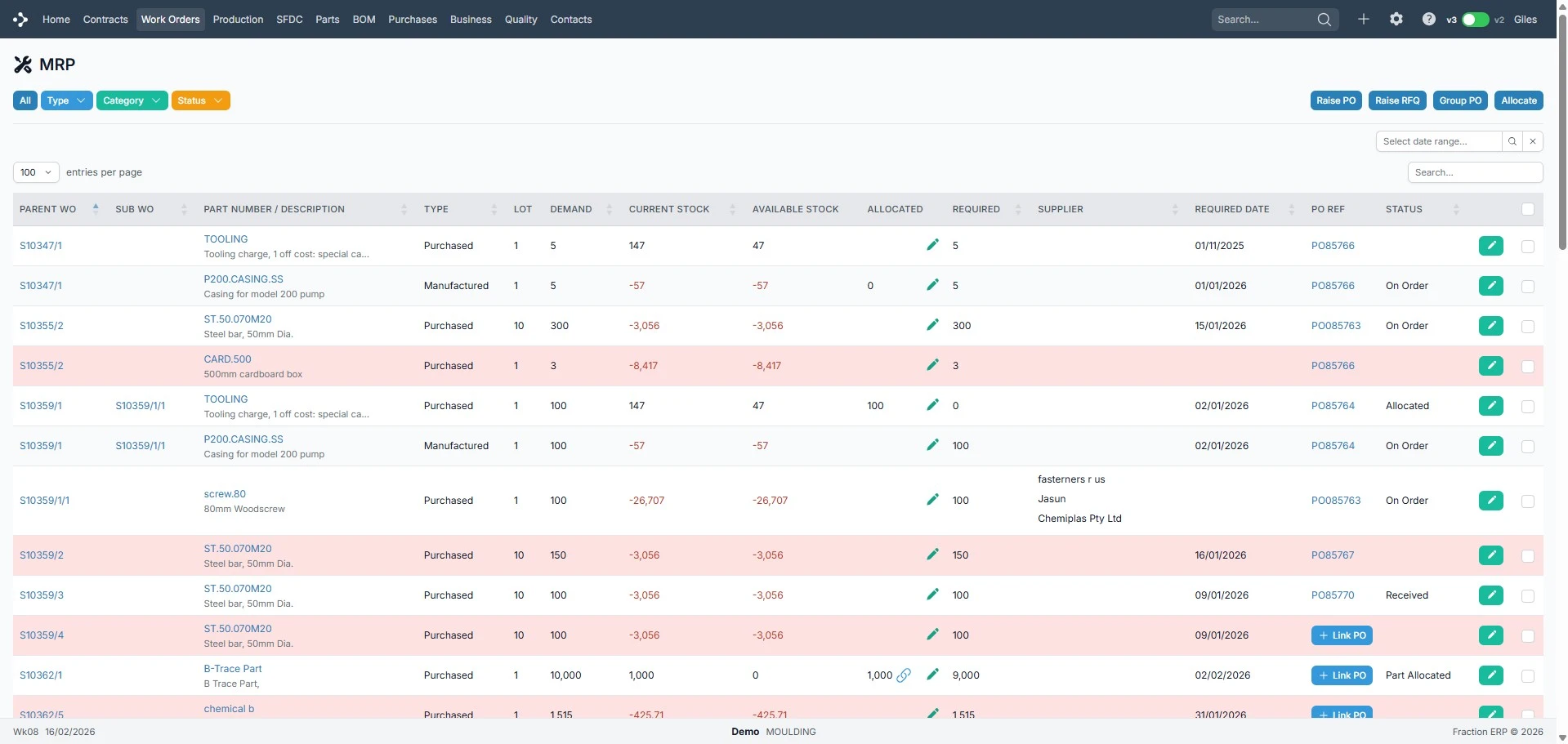
- MRP spreadsheets Automated material planning
- Stock spreadsheets Real-time inventory control
- Production spreadsheets Visual scheduling
- Job tracking sheets Live shop floor data
Everything connected in one system.
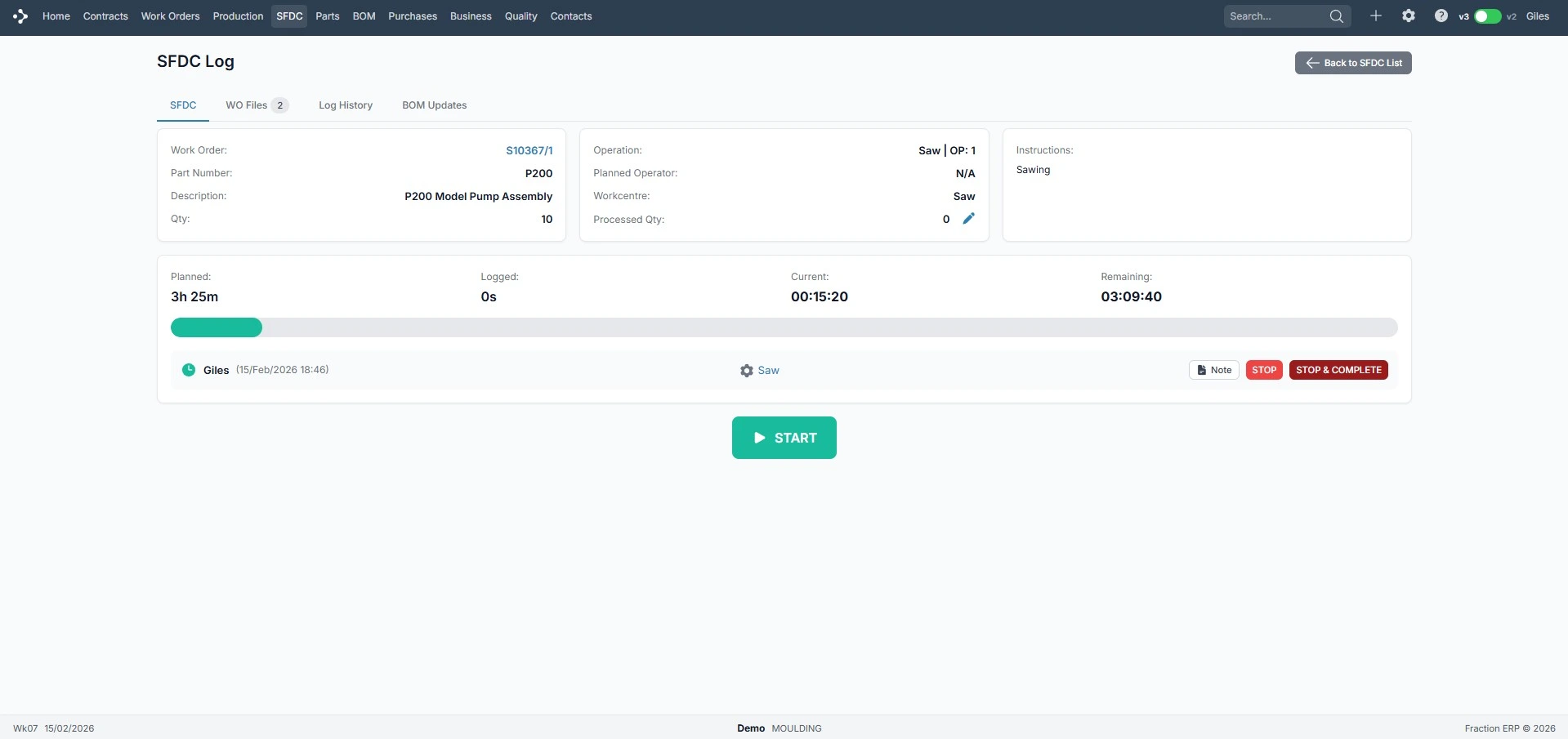
Built for Simplicity — Not Complexity
One of the biggest concerns when replacing Excel is: "Will the new system be too complicated?"
- Easy to use
- Quick to adopt
- Practical for real manufacturing environments
The Benefits of Moving Away from Excel
Excel vs ERP for Manufacturing
| Capability | Excel | Fraction ERP |
|---|---|---|
| Real-time data | ||
| Multi-user access | ||
| Integrated processes | ||
| Scalable | ||
| Production visibility |
When is the Right Time to Replace Excel?
Most manufacturers reach a tipping point when:
- Growth increases complexity
- Errors become costly
- Planning becomes too time-consuming
- Visibility is no longer reliable
Trying to fix Excel usually means adding more tabs, more formulas, and more manual processes. This increases risk — not control.
The real solution is a system built for manufacturing.
Frequently Asked Questions
Why do manufacturers use Excel?
Excel is flexible, low-cost, and easy to start with, making it a common early solution.
What are the risks of using Excel in manufacturing?
Errors, lack of real-time data, poor scalability, and disconnected processes.
Can Excel handle MRP?
At a small scale, yes — but it becomes difficult to manage as complexity grows. Learn more.
What replaces Excel in manufacturing?
ERP systems replace spreadsheets by connecting all processes into one system with real-time data. See MRP software.
See How Fraction ERP Replaces Excel in Practice
If your business is still relying on spreadsheets, you are not alone. But there is a better way to manage your operations.