
MRP vs ERP: What's the Difference for Manufacturers?
Understanding When MRP is Enough — and When You Need ERP
Many manufacturers start with MRP to plan materials. But as operations grow, production becomes harder to manage, scheduling gets complex, and data becomes disconnected. This is where ERP becomes essential.
What is MRP?
Material Requirements Planning — focused on materials planning.
It calculates:
- Material requirements
- Purchase quantities
- Timing of supply
Purpose: ensure materials are available for production.
What is ERP?
Enterprise Resource Planning — a complete system for your entire operation.
It includes MRP, plus:
- Production scheduling
- Inventory & purchasing
- Sales, shop floor & reporting
Purpose: connect all parts of your business in one system.
The Key Difference: Scope
MRP focuses on one part of the process. ERP connects everything.
| Area | MRP | ERP |
|---|---|---|
| Materials planning | ||
| Inventory management | ||
| Production scheduling | ||
| Purchasing | ||
| Shop floor tracking | ||
| Business-wide visibility |
Why MRP Alone Stops Working
MRP works well at a basic level. But problems arise as complexity increases:
- Planning is disconnected from production
- Schedules don't reflect reality
- Data is duplicated across systems
- Teams work in silos
You can plan materials, but you can't control operations.
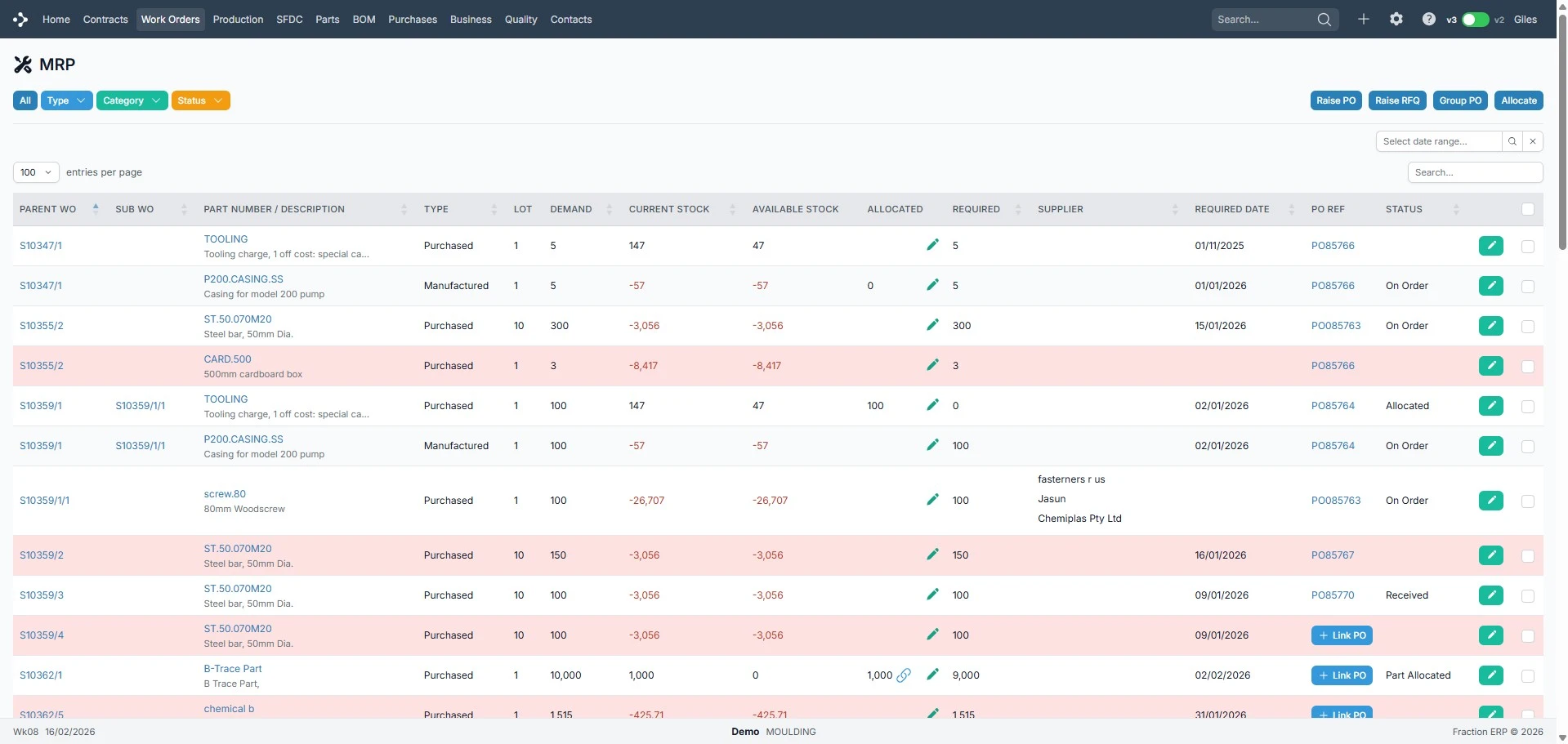
The Real Problem: Disconnected Systems
Many manufacturers operate with MRP in spreadsheets, scheduling in separate tools, shop floor tracking manually, and purchasing handled independently. This creates delays, errors, and poor visibility.
MRP in spreadsheets
Scheduling in separate tools
Shop floor tracked manually
Purchasing independent
The business is not working from one version of the truth.
How ERP Solves This
ERP brings everything together. One system. One data set. One version of the truth.
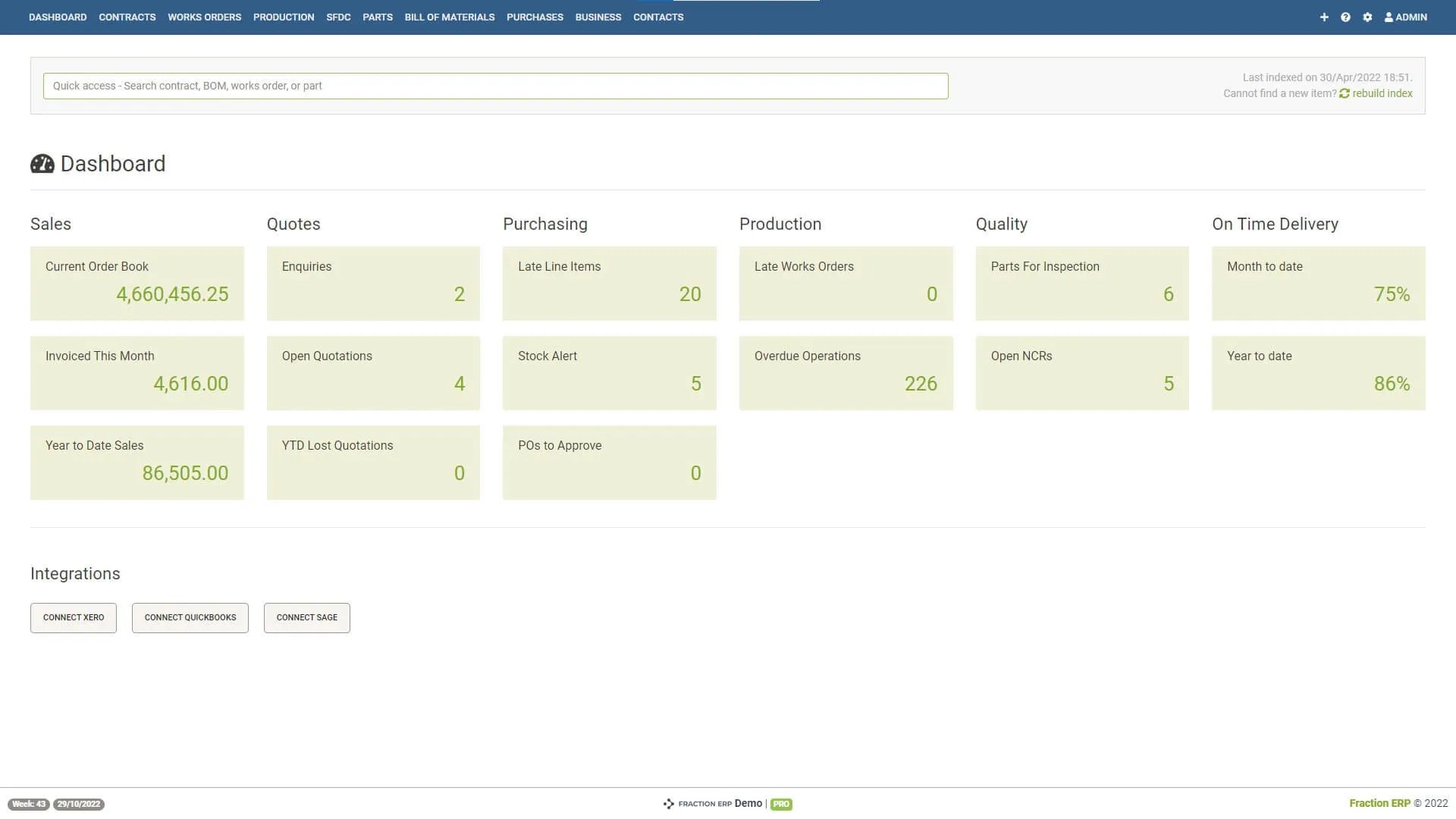
- Sales orders drive production
- Materials are planned automatically
- Production is scheduled realistically
- Shop floor data updates everything in real time
The entire operation becomes connected.
MRP vs ERP in Practice
With MRP (or spreadsheets)
- Materials are planned
- Schedules may be inaccurate
- Progress is unclear
- Updates are manual
With ERP
- Materials, production, and scheduling connected
- Data updates in real time
- Decisions based on accurate information
- Full operation managed in one system
When is MRP Enough?
- Small product range
- Simple production
- Low order volumes
- Spreadsheets still manageable
When Do You Need ERP?
- Spreadsheets for planning
- Scheduling becoming difficult
- Missing delivery dates
- Data across multiple systems
- Lack of real-time visibility
These are signs your business has outgrown MRP alone.
Fraction ERP: MRP as Part of a Complete System
Full MRP functionality — connected to everything else your business needs.
All in one system — no integrations, no duplication, no silos.
Ready to Move Beyond MRP?
If your business has outgrown spreadsheets and standalone tools, see how Fraction ERP connects your entire manufacturing operation.